
Experiential Marketing Examples: What Great Brand Activations Look Like
The best way to understand what experiential marketing can achieve is to look at specific campaigns that actually worked, not the concept decks, but the executed events and what they produced. Across brand types and budget levels, the campaigns that generate the most coverage, loyalty, and commercial impact share a set of production and strategic decisions that are worth studying. This post covers some of the strongest experiential marketing examples in recent years: what each brand did, why it worked, and what the production reality behind it looks like. Including one IDEKO produced.
What separates a great experiential marketing example from a forgettable one
Before the examples, a frame. The campaigns worth studying are not the ones with the biggest budgets. They're the ones where the concept, the execution, and the audience were aligned precisely enough to produce a result that advertising alone couldn't have achieved.
Three things consistently separate the best from the rest. The experience was specific, meaning it could only have come from that brand, in that context, for that audience. The production quality matched the brand's positioning, so the physical reality of the activation reinforced rather than contradicted what the brand stands for. And the event created something beyond attendance, content, press, loyalty, or direct conversion that extended the impact after the last guest left.
With that frame, here are the examples.
Nike Victory Park, Brooklyn Bridge Park, New York
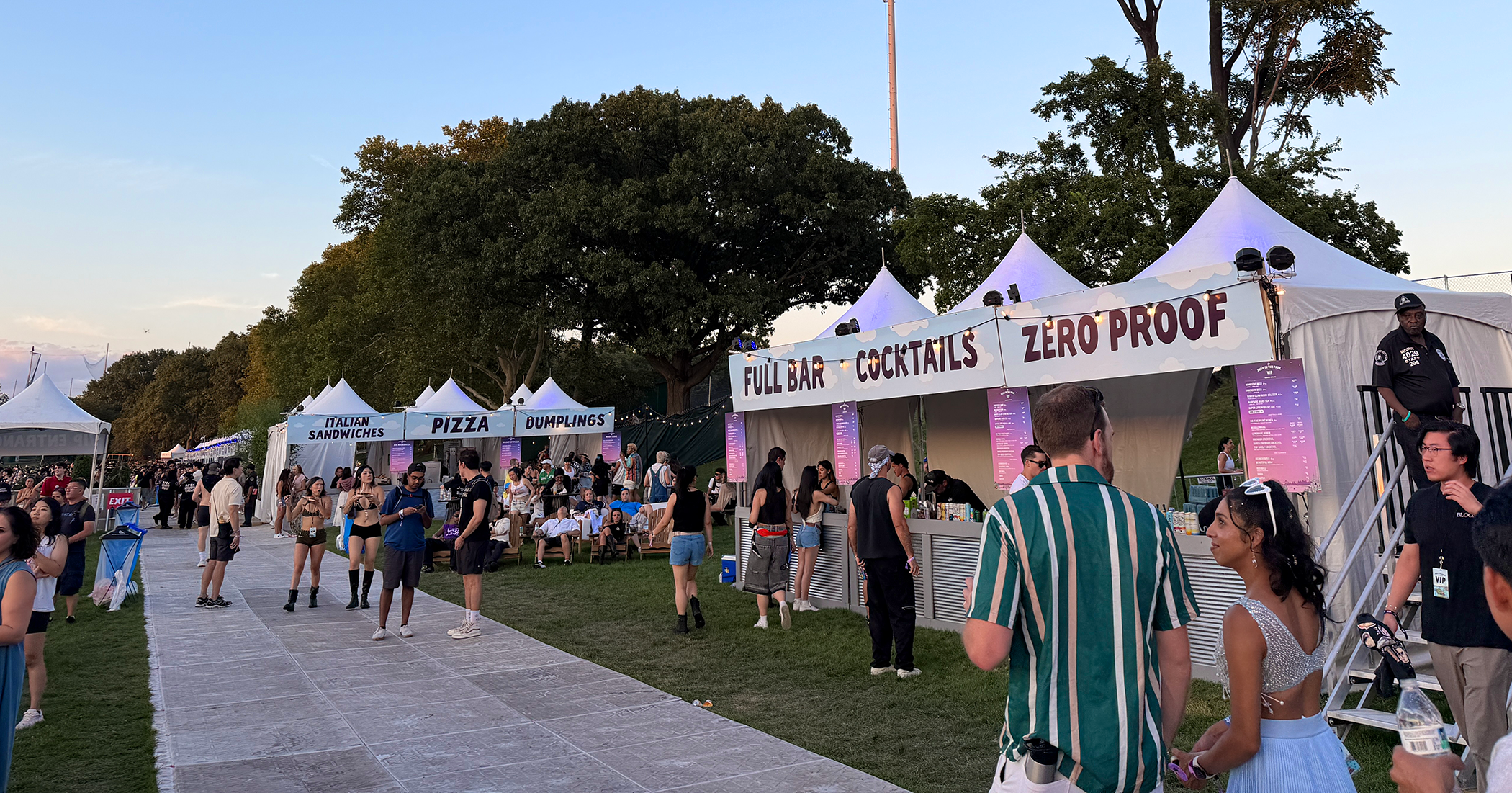
In August 2024, Nike produced Victory Park at Emily Warren Roebling Plaza in Brooklyn Bridge Park. A three-day basketball experience during the Olympics, it was the championship moment for Nike's NYvsNY tournament, which brings together the best emerging basketball talent from New York City neighborhoods.
The setting was specific to New York in a way that mattered. Brooklyn Bridge Park, with the Manhattan skyline and the bridge as backdrop, is one of the most photographed locations in the city. A custom basketball court was built on-site. The best high school hoopers from across the boroughs competed for the NYvsNY crown. There was exclusive merchandise, a curated brand environment, and an energy that was genuinely connected to New York basketball culture rather than borrowed from it.
IDEKO teamed up with Nike to executive produce Victory Park, working alongside production partners Game Seven and Something Special Studios. The event ran across three days, drawing crowds that came for the basketball and stayed for everything around it.
What made it work was authenticity at every level. The tournament has roots in real NYC basketball culture. The location was iconic but not generic. The production built a world around the game that felt earned rather than applied. And the visual backdrop guaranteed that every photo and video taken there told the story Nike wanted told.
Browse the IDEKO project portfolio to see the Victory Park production and other work of comparable scale and complexity.
SKIMS pop-up, Rockefeller Center, New York
SKIMS built its brand largely through digital channels and influencer marketing before making a significant move into physical retail through a series of pop-ups that consistently generated outsized press and social coverage.
The Rockefeller Center pop-up, which featured a personal appearance by Kim Kardashian, exemplified the brand's approach to physical activations. Instead of merely showcasing products, SKIMS emphasized the experience consumers have within the store, with pop-ups often designed to reflect the brand's identity through carefully curated aesthetics that resonate with its target demographic.
The brand's Chief Commercial Officer Robert Norton articulated the strategy directly: "We had a very large digital business, so when we rolled out physical, we didn't have to be like everyone else, and we needed to show up in more of an experiential way versus traditional brick and mortar."
What SKIMS understood was that a pop-up for a brand of its scale is not primarily a sales channel. It's a content generation event and a brand equity play. Every person who attended and posted from inside that space was extending the brand's reach to their network. Every press outlet that covered the activation reached an audience that the brand's paid media didn't need to buy.
The production lesson is in the finish quality. SKIMS pop-ups are designed to photograph as well as they exist in person. That's not accidental. It's a production decision that starts in the design phase and runs through every material and lighting choice in the build.
Disney Treasure christening, New York City
In November 2024, Disney Cruise Line christened its newest ship, the Disney Treasure, in New York City. The christening ceremony included a drone light show over the harbor celebrating the ship's launch.
The production ambition was significant. A drone light show at scale in New York Harbor, with the city skyline as backdrop, is not a simple event to permit or execute. The choreography, the coordination with the FAA and local authorities, and the visual design of the show all required real production expertise in a demanding urban environment.
What Disney achieved was a brand moment that reached far beyond the people physically present. The imagery from the drone show traveled through press and social media nationally. The christening became a news event, not just a brand event, which multiplied its reach without additional media spend.
The experiential marketing lesson here is about the power of spectacle in the right context. Disney Cruise Line is a premium brand selling an immersive experience. The launch event was designed to communicate exactly what the brand promises: something extraordinary that you'll remember. The production matched the promise.
The New York City location was also strategic. Disney didn't need to be in New York for this event. Choosing it signaled the scale and cultural ambition of the launch in a way that a Florida ceremony would not have. Location is a brand decision, not just a logistical one.
P&G Thank You Mom, Olympics campaigns
Procter & Gamble's Thank You Mom campaign, which ran across multiple Olympic Games, is one of the most studied experiential marketing programs of the past decade. The campaign combined broadcast advertising with live experiential elements at Olympic venues, creating what became known as the Family Home, a dedicated space for Olympic athletes' families at each Games.
The Family Home was a physical environment where athletes' families could gather, watch the competition together, and be supported throughout the Games. It was branded by P&G but felt genuinely useful rather than promotional. Families didn't come because it was a P&G activation. They came because it served a real need. The brand association was the result, not the pitch.
The production insight is in the brief. P&G identified a genuine gap in the Olympic experience for athletes' families and built a product that filled it. The brand message, that P&G products support the people who support champions, was communicated entirely through the experience itself rather than through signage or messaging within the space.
That is a harder brief to write than "build a branded activation." It requires understanding the audience deeply enough to create something they actually want, then having the production capability to execute it at scale across multiple international locations.
CeraVe x Michael Cera, guerrilla marketing
Not every great experiential marketing example requires large-scale fabrication. CeraVe's Super Bowl 2024 campaign demonstrated what guerrilla marketing can achieve when the concept is sharp enough.
The campaign launched in late January with paparazzi-style photos of actor Michael Cera carrying bags of CeraVe products through Brooklyn, followed by influencer content showing him signing bottles at a pharmacy. The brand then denied his involvement in a social media post before the Super Bowl ad revealed the fictional storyline: Michael Cera as the brand's fake founder, with dermatologists clarifying that CeraVe was developed with real dermatologists, not the actor.
The name similarity between Michael Cera and CeraVe had been an organic internet joke for years. The brand leaned into existing cultural conversation rather than manufacturing something new, which is why the campaign felt authentic rather than manufactured.
The production was minimal compared to the other examples here. The investment was in the concept and the commitment to executing it with a straight face across multiple phases before the reveal. That discipline, not breaking character prematurely, not over-explaining the joke, is what made it work.
The lesson for brands is that experiential marketing does not always require a major build. Sometimes the most effective activation is one that meets the audience inside a conversation they're already having.
What the best experiential marketing examples have in common
Across all of these campaigns, a few consistent principles apply.
The concept was specific to the brand and audience. Nike Victory Park could only be a Nike event. The SKIMS pop-up experience could only come from SKIMS. The Disney christening drone show could only be a Disney moment. CeraVe's campaign worked because the concept was native to that brand's specific cultural context. Generic concepts produce generic outcomes regardless of budget.
The production quality matched the brand. Every activation held the standard the brand set in every other context. A premium brand with sloppy production sends a mixed message. The brands that run the best experiential campaigns treat production quality as non-negotiable.
The experience created something beyond attendance. Press coverage, social content, word-of-mouth, loyalty, or direct conversion. Every campaign above produced outcomes that extended beyond the people who were physically present.
Working with IDEKO
IDEKO's brand activations andexperiential marketing services cover the full production scope from concept through permitting, fabrication, and on-site execution. The Nike Victory Park project is one example of what that looks like in practice.
If you're developing a campaign and want to understand what's achievable at your timeline and budget,get in touch directly with the brief. The production conversation determines what's possible.