
What Is Experiential Marketing? A Complete Guide (With Real Examples)
Most marketing talks at people. Experiential marketing puts them inside the story.
A billboard tells you a brand exists. An experiential activation makes you feel something about it. That difference is not subtle. It's the reason brands with serious budgets are moving more dollars into live events, brand activations, and immersive experiences every year.
This guide covers what experiential marketing actually is, the different forms it takes, what good execution looks like, and why production quality matters more than most brands plan for.
What Is Experiential Marketing?
Experiential marketing is a live, immersive strategy that puts consumers into direct, physical contact with a brand. Instead of broadcasting a message, you create a moment. One that people participate in, remember, and talk about.
The goal is to make someone feel something real. When people feel something at an event, they associate that feeling with your brand. That's where loyalty starts.
It goes by a few names: brand activation, live marketing, event marketing, engagement marketing. The terminology varies, but the idea is the same. Get off the screen and into real life.
Why Brands Invest in Experiential Marketing
Advertising is getting harder to trust and easier to skip. People have trained themselves to filter out banners, scroll past sponsored posts, and mute pre-roll before the skip button even appears. Experiential doesn't work that way. You can't skip a 10,000 square foot activation in Times Square. You can't scroll past a crowd forming around a pop-up in your neighborhood.
The other reason is retention. People remember experiences far longer than they remember ads. If your brand creates a moment someone genuinely enjoys or is surprised by, they associate that feeling with you. That emotional connection drives repeat purchases, word-of-mouth, and long-term loyalty.
That's the core logic: quality events foster brand loyalty.
Types of Experiential Marketing
There's no single format. The type of activation a brand chooses depends on their audience, goals, timeline, and budget.
Brand Activations
A brand activation is an event or campaign designed to build awareness and emotional connection. These are often one-off moments built around a product launch, cultural event, or seasonal campaign. Pop-up spaces, sampling events, interactive installations, live performances connected to a brand.
The best ones give people a reason to stop, engage, and share. The worst ones feel like branded furniture in a room nobody wanted to enter.
Live Event Production
This covers the full production of live events: concerts, brand-sponsored sporting events, tentpole activations, flagship parties, and more. Scale ranges from intimate 500-person events to massive multi-stage outdoor builds.
Full-service production means handling everything. Venue sourcing and permitting, structural fabrication, lighting and audio, crew logistics, run of show, and teardown. When a brand needs one partner who owns the entire event from ideation to execution, this is what they're buying.
SeeIDEKO's experiential marketing services for a closer look at how full-service production works in practice.
Pop-Up Experiences
Pop-ups are temporary, location-specific activations. They create urgency and exclusivity by design. A great pop-up makes people feel like they got to be somewhere special. They're also highly shareable, which extends reach well past whoever actually walked through the door.
Pop-ups work in retail corridors, cultural hubs, festivals, and standalone locations. The challenge is always logistics: short setup windows, tight permits, and builds that have to install fast and still look like they cost what they should.
Product Launch Events
When a brand launches something new, a well-executed event generates more press, social content, and industry attention than most paid media buys. The event becomes the story. Journalists, influencers, and clients attend something designed to showcase the product in its best environment.
The event has to feel like it belongs with the product. A premium product with a sloppy launch sends a message the brand didn't intend to send. That disconnect gets noticed.
Guerrilla Marketing
Guerrilla activations are unexpected, often high-impact moments in public spaces. They rely on surprise. The best ones create an immediate social media response because nobody anticipated seeing it. Lower budget relative to full productions, but they require creative precision and solid permitting to execute without getting shut down.
In New York City, that means knowing the rules cold. Public space activations require permits, and navigating that process takes real experience. IDEKO has done it repeatedly, includingTimes Square permitting and outdoor activations across the five boroughs.
Sponsorship Activations
When a brand sponsors a major event, the sponsorship is only the entry point. What happens inside that activation space is where the actual work begins. Brands that show up with a banner and a table miss the whole point. Brands that build a fully designed experience within a sponsorship footprint get remembered.
The difference almost always comes down to production quality and the intentionality of the design.
Immersive Experiences
These are environments built for total sensory immersion. The attendee isn't watching something; they're inside it. Digital installations, projection mapping, interactive audio environments, multi-room narratives. They generate significant press and social sharing because they're genuinely hard to describe without a photo or video.
What Experiential Marketing Examples Look Like in Practice
Concepts are easy to pitch. Executed work is harder to fake.
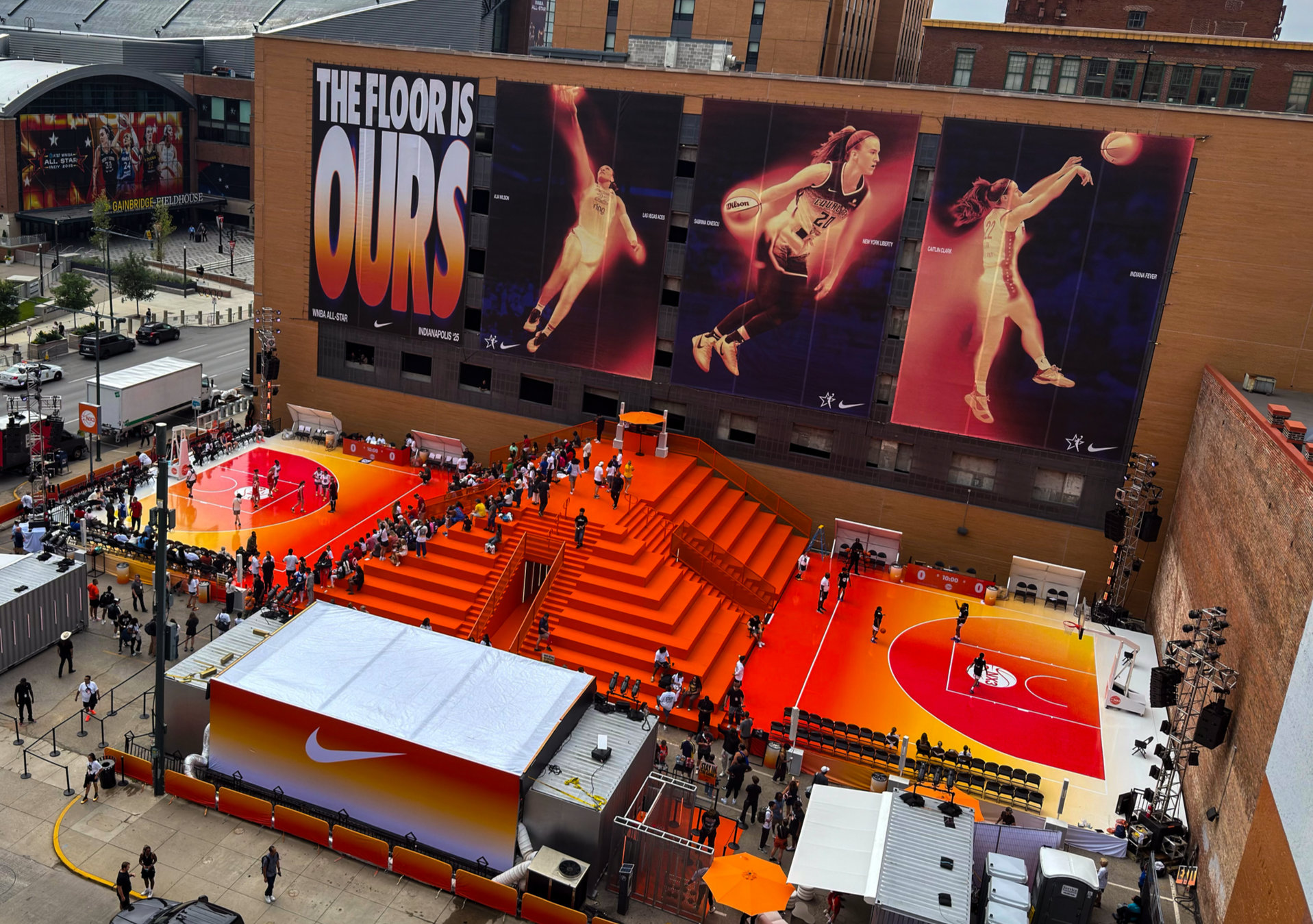
IDEKO has produced outdoor activations, tentpole events, complex brand builds, and large-scale live events for major brands. The work spans structural fabrication to run-of-show management to full logistical production in demanding locations.
Browse the IDEKO project portfolio to see executed work across event types and scales.
What separates a forgettable activation from one people talk about comes down to the same things every time: production quality, logistical precision, and a team that solves problems before the client even knows there was one.
What Makes Experiential Marketing Actually Work
Strategy alone doesn't make a great event. Execution does.
A lot of brands get excited about a concept and significantly underestimate what it takes to bring it to life. The structural builds, the permitting process, the load-in timeline, the vendor coordination, the safety requirements, the contingency planning. All of it has to work for the experience to feel effortless on the other side.
A few things the best experiential campaigns share:
A specific objective. Not "create awareness." Something concrete. What do you want attendees to do, feel, or remember? That answer should shape every production decision downstream.
Production that matches the brand. A premium brand with sloppy fabrication sends a mixed message. The physical quality of what you build reflects on the brand, whether or not anyone consciously registers it.
Operational precision. Complex events have hundreds of moving parts. The teams that execute well aren't improvising. They have detailed run-of-show documentation, contingency plans, and experienced people in every role.
A single accountable partner. When production is fragmented across multiple vendors with no one holding the overall outcome, things fall apart. The brands that run the best events work with full-service partners who own the result.
The Production Side Nobody Talks About
Most content about experiential marketing focuses on the strategy. The creative concept. The consumer insight. That matters. But what actually determines whether an event succeeds or fails is production.
Permits. Structural engineering and fabrication. Load-in logistics. Audio and lighting. Crew management. Weather contingencies. Teardown.
This is the part of experiential marketing that's genuinely difficult. It requires technical expertise, relationships with local authorities and vendors, and the ability to manage complex timelines under pressure. In New York specifically, outdoor events require navigating a permitting process that regularly trips up teams who haven't done it before.
IDEKO is owner-operated and full-service. Design, permitting, fabrication, and execution are handled in-house. That's the difference between a vendor who manages pieces and a partner who owns the result.Event fabrication in NYC is one of IDEKO's core capabilities, built for complex, high-stakes work in demanding urban environments.
How to Choose an Experiential Marketing Partner
If you're an event marketing director or brand manager sourcing a production partner, a few things matter more than others:
Technical capability. Can they actually build what you're envisioning? Do they have in-house fabrication, or are they outsourcing everything and marking it up? Ask for project documentation, not just polished final photos.
Permitting experience. For outdoor activations especially, permitting is where projects stall or get killed. Your partner needs to know this process well before the project starts.
References from comparable work. Not website testimonials. Direct conversations with people who ran similar events with them.
Accountability on-site. When something goes wrong (and something always does), who is responsible? The best partners handle it before the client feels it.
Communication. This one is underrated. Complex events require constant, proactive communication. A partner who goes quiet at critical moments creates anxiety. You want a team that keeps you informed at every stage without you having to chase them.
Experiential Marketing in New York City
New York is one of the most demanding cities in the world for live events. The permitting complexity, the logistics of dense urban environments, the high expectations of attendees and press, and the competition for attention all raise the bar considerably.
The brands that run great events in New York work with teams who know the city. That means knowing which agencies control which permits, what realistic timelines look like, how to manage logistics in locations with no staging area, and how to build something impressive in a space that was never designed for events.
IDEKO is based in New York and produces events across the city and nationally. The team has the relationships, technical capability, and operational experience to execute complex events in the most demanding conditions.
Measuring Experiential Marketing
Experiential marketing is harder to measure than paid digital. There's no conversion pixel on a live event. But that doesn't mean the impact isn't real or trackable.
What you track depends on what you were trying to accomplish. Attendance and dwell time. Social impressions and user-generated content. Press coverage and earned media value. Brand sentiment before and after. Lead capture and direct sales at the event. Post-event data on brand recall and purchase intent.
The mistake brands make is trying to reduce experiential to a cost-per-click equivalent. The value of a well-executed live experience doesn't fit neatly into a single attribution window. It compounds. Someone who attended your event tells others about it. They post about it. They remember your brand differently than they did before. That has real business value, even when the spreadsheet can't hold all of it.
Talk to IDEKO About Your Next Project
If you have an event in the works and want to talk through scope, production approach, or feasibility, reach out directly.
Contact IDEKO and bring the brief, the timeline, and the honest scope of what you're trying to build. We'll tell you what's possible and what it takes to get there.
If it's possible, we can deliver it.