
Brand Activation Ideas That Drive Customer Engagement
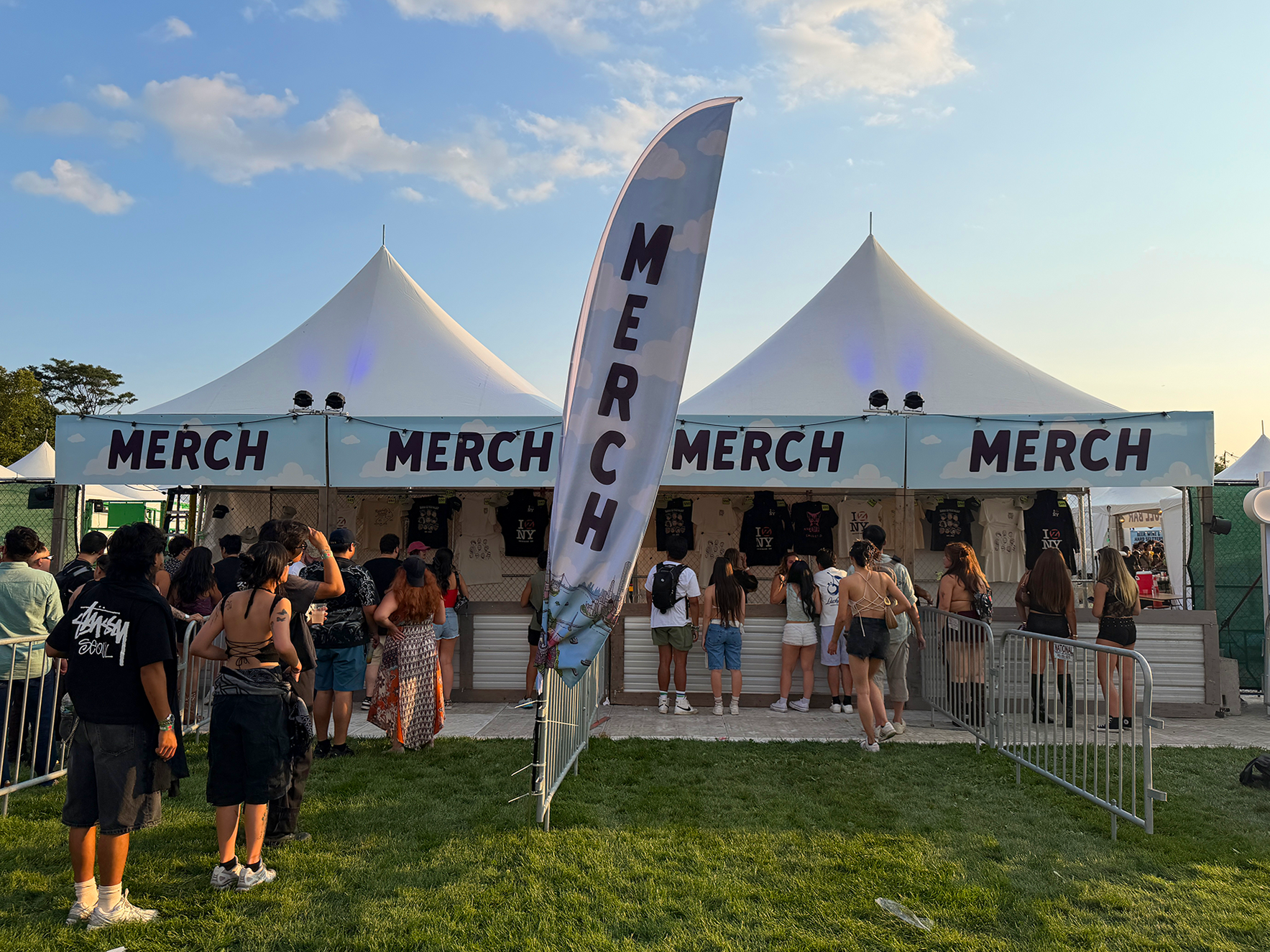
Custom-built brand activation environment with engaged crowd at an outdoor experiential marketing event in New York City
The difference between a brand activation idea that works and one that doesn't is not budget. It's specificity. A generic activation in a high-traffic location produces generic results. An activation built around a precise insight about the brand's audience, executed at the quality the concept requires, generates the kind of engagement that extends well beyond the people in the room. This post covers brand activation ideas that consistently produce strong results, with real examples of brands that have executed each format well. The ideas span budget levels and formats. What they share is that each one is built around something the target audience actually wants to be part of, which is the only test that matters.
What makes a brand activation idea worth doing
Before the list, one frame worth keeping. An activation idea earns its budget when it passes three tests.
The audience has a genuine reason to show up beyond free stuff. Free giveaways generate lines, not engagement. An experience that offers something people can't get anywhere else generates attendance that means something.
The experience is specific to the brand. An activation that could belong to any company in the category is doing brand-generic work. The concept should be native to what the brand actually is and what its audience actually cares about.
The production quality matches the brand's positioning. A premium brand with an underpowered build sends a message it didn't intend to send. Whatever the idea is, the physical execution has to hold the standard.
With those tests in mind, here are the formats and ideas that consistently perform.
1. Take over a public space with something genuinely worth watching
The highest-performing outdoor activations don't just occupy a space. They transform it into something people stop for.
Nike did this with Victory Park, a three-day basketball experience at Emily Warren Roebling Plaza in Brooklyn Bridge Park during the 2024 Olympics. A custom court was built under the Brooklyn Bridge. The best emerging basketball talent from NYC neighborhoods competed for the NYvsNY championship. The environment was designed around the game, not around Nike's logo. The brand was present in the execution quality, the energy, and the curation, not in signage that told people to feel something.
The idea: find the intersection of what your brand stands for and what your audience already loves. Build something at that intersection in a location that amplifies both.
IDEKO executive produced Victory Park alongside Game Seven and Something Special Studios. See more at the IDEKO project portfolio.
2. Build a pop-up that functions as a destination
SKIMS has used pop-up retail to generate press and social coverage that its paid media budget couldn't have bought. The Rockefeller Center pop-up, with a personal appearance by Kim Kardashian, drew lines and produced content that traveled well beyond the guest count. The Men's pop-up at Nordstrom NYC gave the brand a physical presence that its online-first model couldn't provide.
What SKIMS understood is that a pop-up for a brand of its scale is not primarily a sales channel. It's a media event. Every person who attended and posted from inside that space was distributing the brand to their network at no additional cost.
The idea: design the pop-up environment to function as well on a phone screen as it does in person. The people who couldn't attend are part of the audience. Build for both.
3. Turn a product launch into a cultural moment
When Disney christened the Disney Treasure in New York City in November 2024, the ceremony included a drone light show over the harbor with the Manhattan skyline as backdrop. The visual was designed to be filmed and shared. It became a news event, not just a brand event, which multiplied its reach without additional spend.
The product being launched was a cruise ship. Most brands launching a product don't have a ship to work with. What they can replicate is the logic: design the launch event to be worth covering as a story, not just as a product announcement.
The idea: ask what would make a journalist write about this even if they weren't invited. Then build the event around that answer.
4. Use humor and surprise as a production strategy
Duolingo has built some of the most effective brand activations of the past few years with a strategy that costs a fraction of a large-scale production: committing to a bit with complete seriousness.
When the Duolingo owl mascot "died" in February 2024 after being run over in a Super Bowl-adjacent stunt, the brand turned the resulting press moment into a multiplatform campaign. The "funeral" content, the grief-stricken fan response, and the eventual "resurrection" generated earned media coverage that the brand couldn't have bought. The production cost was minimal. The concept commitment was total.
The idea: identify the cultural conversation your brand has access to and participate in it with enough commitment that it becomes a story. Half-hearted humor reads as embarrassing. Full commitment reads as brand confidence.
5. Create a shareable moment that can't be described without a photo
Some of the most effective activation elements are not experiences in themselves. They're moments designed to be photographed and shared. The brand benefit comes from the content, not just the live attendance.
A structure with a remarkable visual from a specific angle. An environmental detail that surprises people when they discover it. A scale element that makes human bodies look interesting in comparison. These are design decisions that translate attendance into content at no additional cost.
The test: when someone sees a photo from inside the activation without any caption, do they want to know where it was taken? If yes, the visual is working. If the answer requires the caption to make sense, the visual is not doing enough.
6. Bring your online community into a physical space
Digital-native brands have audiences that exist primarily online. A live event that gives those audiences a first physical touchpoint creates a qualitatively different relationship than any digital interaction can produce.
The format works because the people who show up are the most engaged segment of the brand's audience. They self-selected in. They came because they wanted to be there, which means their attention, their openness to the brand, and their likelihood to generate content are all higher than at a general-audience activation.
The idea: design the event specifically for this audience. References to the online community that outsiders won't understand. Moments that reward the people who have been following the longest. An environment that feels like it was made for them, because it was.
7. Sponsor a cultural moment and build something worth attending inside it
Sponsorship logos on banners and stage backdrops are not brand activations. They're awareness plays with limited emotional return. Brands that turn sponsorships into genuine activations build experiences within the sponsorship footprint that give the audience a reason to seek them out.
The best sports and cultural sponsorship activations give attendees something they couldn't get anywhere else at the event: exclusive access, a better viewing experience, a product moment that's only available inside the branded space. That value exchange is what converts a logo impression into an engagement.
The idea: before committing to a sponsorship, ask what the activation within it will be. If the answer is a branded tent with a table, reconsider the investment.
8. Build something people can't explain without a video
Immersive experiences that use technology, movement, or sensory elements generate social content that photographs differently from a standard event. A projection-mapped structure, an audio environment that responds to movement, a physical installation that does something unexpected when you interact with it.
The social sharing behavior from this format is driven by the need to show people what it was. A static photo doesn't capture it. A 15-second video barely does. That gap between what the experience was and what can be conveyed creates a natural sharing instinct.
The production requirement is higher for this format than for most. Technology integration, custom fabrication, and reliable hardware that handles thousands of interactions over multiple days all need to be scoped correctly. A technology element that fails during the event is worse than not having it.
9. Take the brand somewhere unexpected
Some of the most memorable brand activations in New York have happened in locations where nobody expected to find a brand. A pop-up in a neighborhood that doesn't usually see activations. A guerrilla moment in a transit space that commuters walk through every day. An installation in a location where the contrast between the brand and the environment is itself the idea.
Unexpected locations generate press and social attention through the simple mechanism of surprise. People post things that surprise them. A brand in an expected location is expected. A brand in an unexpected location is a story.
The permitting reality in New York is that guerrilla doesn't mean unpermitted. Public space activations require permits regardless of how spontaneous they appear. Building the permitted version of an unexpected activation requires knowing the permitting landscape well enough to identify what's achievable in unusual locations.
10. Let attendees make something and take it with them
Activations that produce a physical output for attendees create a brand artifact that leaves the event with the guest. A customized product. A printed photo. A generated image. Something that was made at the event, personalized to the person, and carried into their life afterward.
The artifact continues working after the event. It appears in homes, in social feeds, in workplaces. Every time the guest sees it, the brand association is reinforced. Every time someone else sees it and asks about it, the brand gets a word-of-mouth moment.
The format works at every budget level. A Polaroid photo station is inexpensive and effective. A full product customization station is more complex. The principle is the same: give people something made for them that they want to keep.
11. Give the audience genuine access they couldn't get otherwise
Behind-the-scenes access, early product experiences, proximity to talent or expertise that the audience couldn't otherwise get. Access-based activations work because they create a sense of exclusivity that has nothing to do with price.
A brand that gives its best customers access to the team behind the product, a preview of something that isn't available yet, or an experience that can't be bought creates a loyalty signal that advertising cannot replicate. The guest who was given access carries a different relationship with the brand than the guest who attended a general event.
The production requirement here is less about scale and more about curation. The experience has to feel genuinely exclusive and genuinely worth the access. An access-based activation that feels like a PR exercise doesn't create the relationship it was designed to create.
12. Put the activation where the audience already is
The most efficient activations don't require the audience to come to them. They go where the audience already is. A festival, a sporting event, a neighborhood market, a commuter hub. The audience is present, their attention is available, and the activation is a discovery rather than a destination.
The production challenge in this format is designing something that competes with everything else happening in the environment. An activation at a festival has to be worth stopping for among dozens of other things competing for the same attention. The design, the staffing, and the core experience all have to be strong enough to pull attention away from everything else.
Executing the idea
An idea that isn't executed at the right production standard is not the idea. The concept and the execution are not separate things. What the audience experiences is the combination of both, and the combination is what creates the brand impact.
IDEKO's brand activations cover the full production scope from concept through permitting, fabrication, and on-site execution. If you're developing an activation idea and want to pressure-test it against production reality, get in touch with the brief.
The right idea, executed at the right standard, in the right location, is how brand activations generate the engagement and loyalty that justify the investment.