
How Much Does Experiential Marketing Actually Cost?
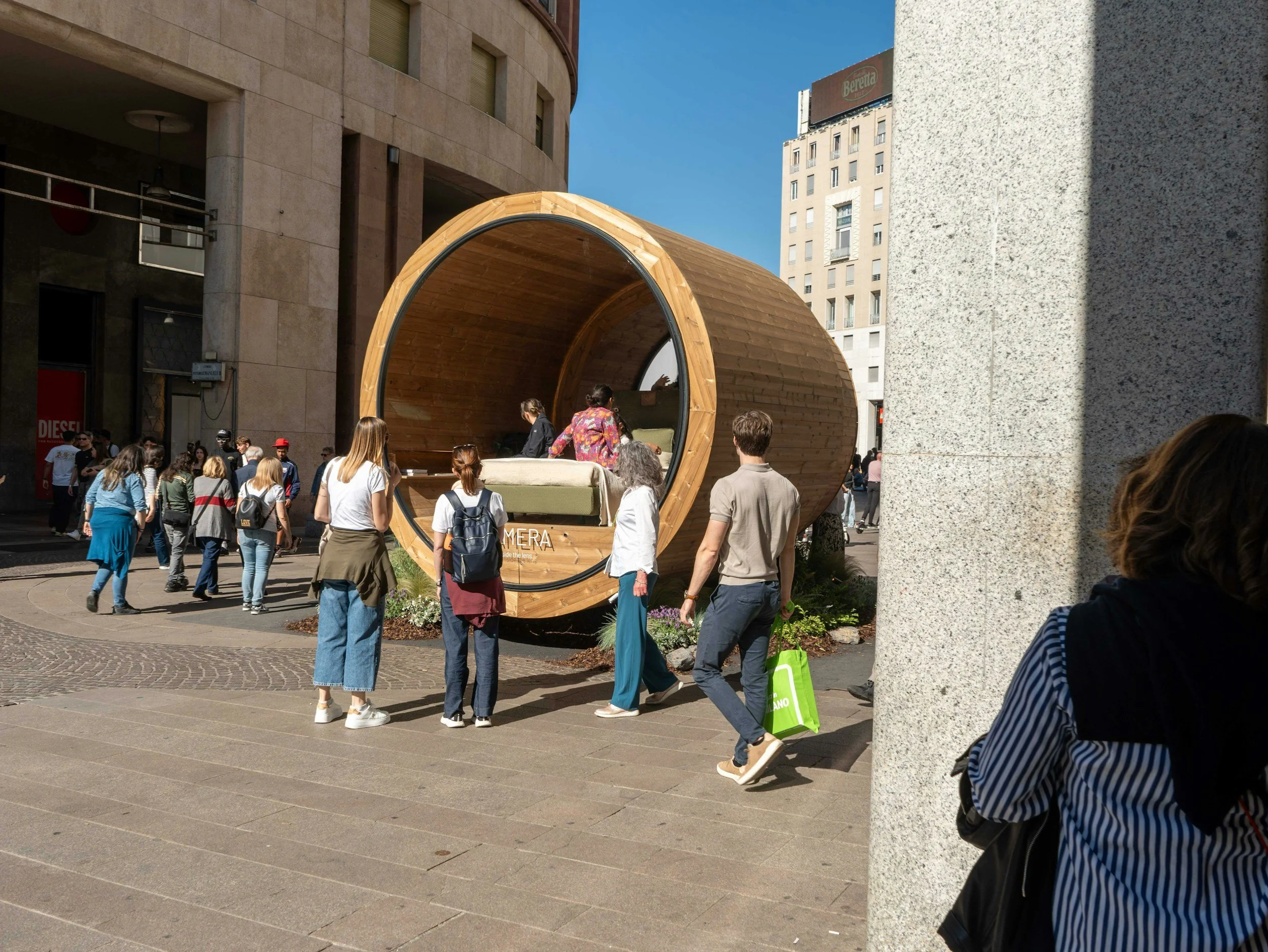
Custom-built experiential marketing activation at a large-scale outdoor event showing the production quality achievable at premium budget levels
The honest answer is that experiential marketing costs anywhere from $15,000 for a focused local activation to well over $1 million for a large-scale tentpole event in a major market. That range is not a dodge. It reflects the fact that experiential marketing is not a commodity service with a fixed price list. It's a custom production discipline where the scope, the location, the build complexity, and the production standard all drive the final number. What most brands get wrong is not the budget itself but the order of operations: they pick a concept and then try to fit it into a budget, rather than starting with the budget and designing the best possible experience within it. This post breaks down what experiential marketing actually costs, what drives those costs, and how to scope a project that delivers real results at your budget level.
Why experiential marketing costs vary so much
Two activations that look similar in a brief can cost dramatically different amounts depending on a handful of production variables. Understanding those variables is what makes it possible to build an accurate budget before a production partner quotes you.
Fabrication complexity. A branded tent with printed graphics costs a fraction of what a custom-fabricated three-dimensional structure costs. The complexity of what gets built is the single largest cost driver in experiential marketing. Materials, structural engineering, finish quality, and installation time all scale with complexity.
Location and permitting. A private venue with straightforward access is cheaper to produce in than an outdoor public space in New York City. Permitting fees, agency coordination, insurance requirements, and the logistical difficulty of accessing certain locations all add to the cost. Times Square activations carry different production costs than a warehouse in Brooklyn, even for the same build.
Event duration. A one-day activation costs less than a three-day run. Crew hours, staffing, and equipment rentals all multiply with time.
Staffing levels. Brand ambassadors, event managers, security, load-in crew, and technical operators all have day rates. A large activation with a 20-person staff costs significantly more to staff than a focused pop-up running four people.
Technology integration. An activation with LED walls, interactive elements, RFID systems, or custom software requires additional development, hardware, and on-site technical support. Technology adds cost and timeline.
Market. The same activation costs more to produce in New York City than in most other U.S. markets. Labor rates, permitting fees, venue costs, and logistical complexity are all higher in major metros.
Budget tiers: what each level gets you
$15,000 to $50,000: focused local activations
At this budget level, the best outcomes come from tight creative briefs and simple, well-executed builds. A branded pop-up with high-quality printed graphics and a focused footprint. A sampling activation with strong brand ambassador staffing. A guerrilla moment designed around a compelling concept rather than production scale.
What you should expect at this level: a single-location activation, a limited installation window, a small crew, and a build that achieves its effect through design intelligence rather than scale. This budget works when the concept is specific and the production is simple.
What you should not expect: custom fabrication, complex technology, or multi-day runs in major permitting environments. Trying to produce a Times Square activation at a $25,000 budget will produce something that looks undersized in that context and damages rather than builds the brand.
$50,000 to $150,000: mid-scale brand activations
This is the range where most mid-market brand activations live. It supports a genuine custom build, a proper installation window, a professional ambassador team, and production management that handles logistics without the client feeling the operational load.
At this level you can produce a well-designed pop-up structure, a branded outdoor activation in a high-traffic location, a product launch event for 200 to 500 guests, or a strong sampling activation with custom fabrication elements.
Permitting is achievable at this budget level for most NYC locations outside the most complex environments. The production quality should be high enough to match a mid-market premium brand's visual standards.
$150,000 to $500,000: large-scale activations and brand events
This is where production ambition becomes achievable without compromise. Custom-fabricated multi-element environments, large outdoor builds, events with significant guest counts, technology-integrated experiences, and activations in complex permitting environments like Times Square or major NYC parks.
At this level, the production company can commit full resources to the project: a dedicated project management team, in-house fabrication, comprehensive permitting management, and a staffing plan that covers every role at the quality the event requires.
This budget range supports the kind of activation that generates press coverage, significant social content, and brand impact that extends well beyond the event itself.
$500,000 and above: tentpole events and flagship productions
At this level, the event is the campaign. A multi-day build at a major location, a custom environment that functions as a destination rather than a backdrop, a production that justifies national press coverage and generates content used across the brand's marketing for months after.
Tentpole events at this budget require a production partner with the experience, relationships, and in-house capability to manage a project of genuine complexity. Permitting across multiple agencies, structural engineering for large builds, large crew management, and operational contingency planning all require teams that have done this before.
What's actually in the budget
A useful experiential marketing budget allocates spend across these categories. The relative weight shifts by event type, but the categories stay consistent.
Fabrication and build: typically 30 to 50% of total budget. Custom structures, scenic elements, branded graphics, surface finishes. In-house fabrication versus brokered fabrication affects both cost and accountability.
Staffing: typically 15 to 25%. Brand ambassadors, event management, load-in crew, security, technical operators. Staff rates vary significantly by market and role type.
Permitting and insurance: typically 5 to 15% in complex markets. Permit fees, insurance certificates, and any required inspections or compliance costs.
AV and technology: typically 10 to 20% depending on the production. Audio systems, lighting, LED, interactive elements, and technical support.
Logistics: typically 5 to 10%. Transport, equipment rentals, catering for crew, contingency.
Production management: typically 10 to 15%. The cost of the team that designs, manages, and executes the entire scope. At a full-service production company, this is often built into the overall quote rather than broken out as a line item.
The cost of getting it wrong
Underbudgeting an experiential activation is not a neutral outcome. A build that looks cheap in a premium context sends a message the brand didn't intend to send. A poorly staffed event creates operational problems that guests notice. A permitting process that wasn't properly funded runs into delays that compress the installation window and affect build quality.
The right budget question is not how little can we spend, but what level of investment is required to produce an experience that achieves the objective and reflects the brand accurately. Those are different questions and they produce different answers.
A $30,000 activation that achieves its objectives is a better investment than a $100,000 activation that doesn't. But a $30,000 activation designed to operate at $100,000 production standards will fail, and that failure has brand costs that don't appear on the invoice.
Get an accurate scope for your project
Budget ranges are directional. An accurate number for your specific activation depends on the concept, the location, the timeline, and the production standard the brand requires.
IDEKO's experiential marketing services cover the full production scope for brand activations in New York and nationally. If you're developing a brief and want a realistic budget built around your specific objectives, get in touch directly with the concept and the event parameters.
Bring the idea, the market, the date, and the honest budget conversation. We'll tell you what's achievable and what it takes to do it right.