

Brand Activation Strategy Guide: A 5-Step Framework for Planning That Actually Works
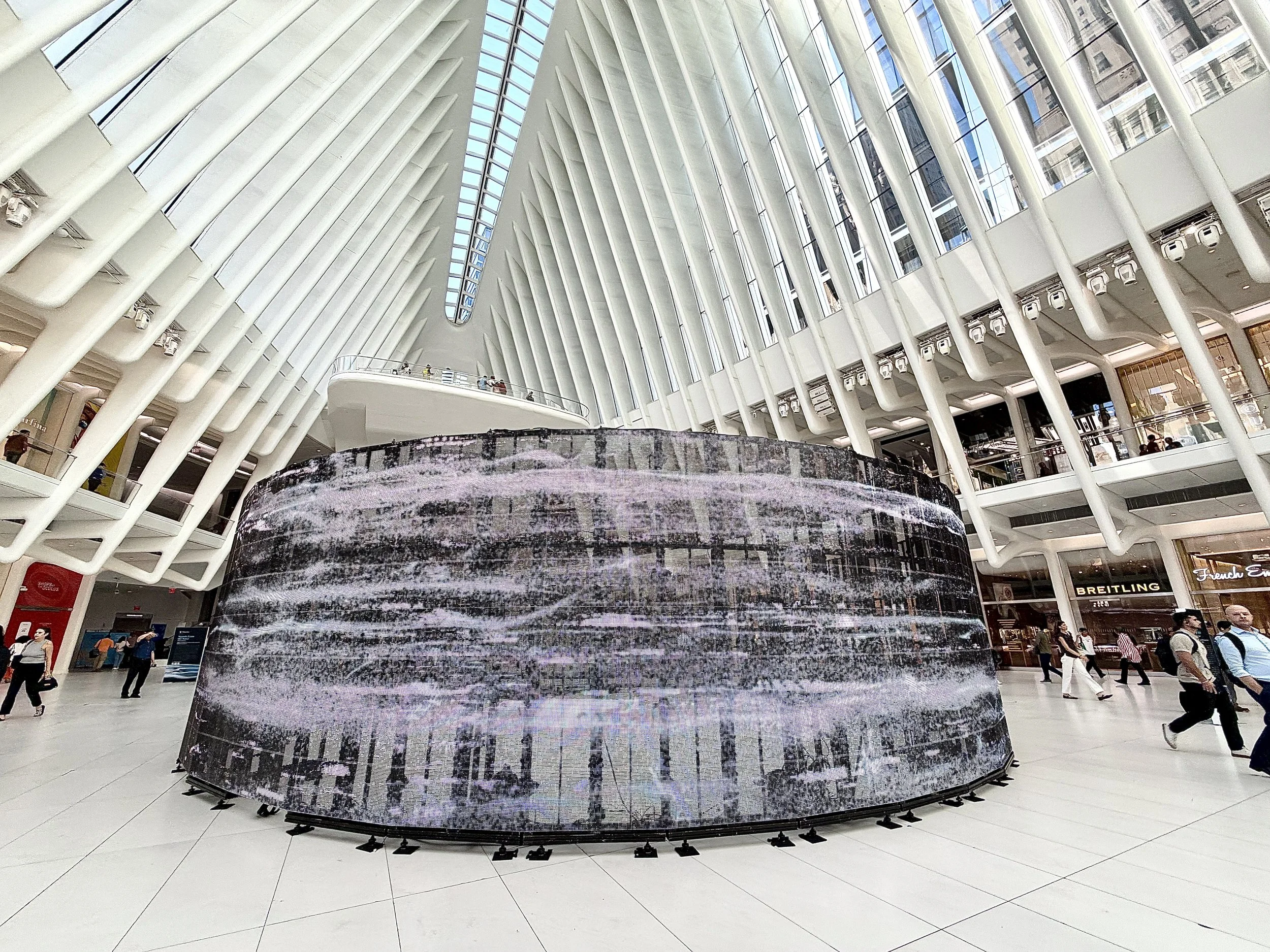
Brand activation strategy in action: a fully produced outdoor brand event with custom fabrication and large crowd engagement in New York City
Most brand activation strategy content covers the creative side: how to pick a concept, how to define your audience, how to make something memorable. What it skips is the production reality that determines whether the strategy is executable. A brilliant concept with a timeline that doesn't account for permitting, a budget that doesn't reflect actual fabrication costs, or a location that can't support the build the brand imagined is not a strategy. It's a mood board. This guide covers brand activation strategy as a complete discipline: the creative and strategic decisions alongside the production and operational ones, because both have to work for the activation to deliver results. The framework runs five steps. Each one builds on the last, and skipping any of them produces a problem that shows up later at a worse time.
Step 1: Define the objective with enough specificity to measure it
Every brand activation starts with an objective. The problem is that most activation objectives are stated at a level of generality that makes them useless for production planning and impossible to measure after the fact.
"Increase brand awareness" is not an objective. It's a category of objective. An objective specific enough to drive an activation strategy looks like this: generate 50 pieces of earned media coverage in the brand's target publications, capture 2,000 qualified leads with a 30-day CRM follow-up sequence, achieve a 25-point lift in purchase intent among activation attendees measured via post-event survey, or produce 500 pieces of attendee-generated social content with a combined organic reach of 2 million impressions.
Each of those objectives produces a different activation. A lead generation objective drives a different format, staffing approach, and data capture infrastructure than a press coverage objective. A social content objective shapes the environment design differently than a community-building objective.
Before any other decision is made, the primary objective has to be stated specifically enough that the team can tell, after the event, whether it was achieved. That specificity is not a reporting convenience. It's the strategic foundation everything else is built on.
Secondary objectives are real and worth acknowledging, but the primary objective takes precedence when production decisions require a tradeoff. An activation trying to equally serve press coverage, consumer sampling, lead generation, and social content will do all four at a mediocre level. One built around a single primary objective with secondary objectives accommodated where they don't compromise the primary will produce one thing exceptionally well.
Step 2: Define the audience and find where they already are
The audience definition drives the location decision, which drives the permitting and production approach. Getting the audience wrong at this stage cascades into every subsequent decision.
A useful audience definition for activation planning goes beyond demographics. It includes where the audience spends time in the physical world, what cultural moments they're already engaged with, what level of effort they'll make to attend something, and what kind of experience creates genuine engagement for them versus performative engagement.
An audience of senior brand managers who attend industry events is different from an audience of 22-year-old consumers who discover brands through social media, even if their demographic profile overlaps. The activation format, the location, the design aesthetic, and the content strategy all follow from understanding which audience the brand is actually trying to reach.
The location follows the audience, not the other way around. A common mistake is selecting a location that seems impressive and then trying to attract an audience to it. The right location is one where the target audience already has a reason to be, or one that has cultural meaning specific to that audience. A brand targeting New York's basketball community placed its activation at Brooklyn Bridge Park during the Olympics because that's where that audience's attention was. That decision was not primarily about foot traffic. It was about cultural alignment.
Once the location type is identified, the specific site selection has to account for permitting feasibility, installation access, and whether the location can support the production the activation requires. A location that is perfect culturally but impossible logistically is not the right location.
Step 3: Choose the format based on the objective, not the trend
The activation format is the structure within which the experience happens. Choosing the right format requires matching the format's natural strengths to the campaign's primary objective.
Pop-up events are strongest for consumer launches, product introductions, and community-building objectives. The temporary nature creates urgency and exclusivity. The format generates social content at high rates. It allows the brand to appear where the audience already is without a permanent location commitment.
Brand activations in public spaces are strongest for awareness objectives at scale. Times Square, Flatiron, Hudson Yards, and similar high-traffic locations deliver audience volume. The production requirement is that the build has to compete with an extraordinary amount of visual competition. Generic builds in high-traffic locations are invisible.
Tentpole events are strongest when the launch or campaign moment justifies a production investment that generates press coverage as a standalone news story. The Disney Treasure christening worked as a tentpole event because the production was ambitious enough to create a news moment, not just a brand moment.
Immersive experiences are strongest for brands that need to create a deep, durable impression: a new brand entering a competitive market, a brand repositioning, or a product that needs more than a visual to be understood. The format generates high-quality earned content but requires more production lead time and budget than simpler formats.
Mobile tours and roadshows are strongest for brands that need geographic reach without the budget to produce separate activations in each market. The touring format amortizes production cost across every stop. The tradeoff is operational complexity that compounds with every city added to the route.
The format decision should be made after the objective and audience are defined, not before. A brand that decides it wants a pop-up and then tries to make that format serve a press-coverage objective is working backward. The objective tells you which format has the highest probability of success.
Step 4: Build the production plan around reality, not optimism
This is the step most brand activation strategies skip, and it's where most activations fall short of what the strategy promised. The production plan has to account for what is actually achievable given the timeline, the budget, the location, and the permitting environment. Not what the brand would like to be achievable.
Timeline
Production timelines for brand activations are not negotiable in the way that creative timelines sometimes are. Permitting agencies have their own review schedules. Fabrication has a minimum production time that doesn't compress because the brief arrived late. Structural engineering drawings take as long as they take.
A realistic production timeline for a complex outdoor activation in New York City works backward from the event date:
12 to 16 weeks out: brief finalized, production partner selected, location confirmed, permitting applications initiated.
8 to 12 weeks out: design development, structural drawings, material specifications, insurance certificates ordered.
4 to 8 weeks out: permit approvals tracked, fabrication underway, staffing recruited and briefed, run-of-show drafted.
2 to 4 weeks out: all permits confirmed in writing, fabrication complete, pre-installation site walk, final run-of-show.
1 week out: crew confirmed, equipment staged, contingency plans reviewed.
A brand that begins this process 6 weeks before the event date is not running a compressed timeline. It is running an impossible one for anything beyond a simple activation. Getting production into the planning conversation early is not a preference. It's what makes the strategy executable.
Budget
Brand activation budgets that are built from the creative concept outward almost always undercount the true production cost. Fabrication, permitting, insurance, staffing, AV, logistics, and production management all have to be accounted for before the budget is presented as achievable.
The categories that most commonly get undercounted:
Permitting fees. In New York, permit fees vary by agency, location, and event type. Parks permits, DOT permits, FDNY tent permits, and Times Square Alliance fees all carry costs that have to be in the budget before the creative scope is locked.
Insurance. Event insurance certificates naming the City of New York as additional insured are required for any activation in public space. The premium varies by event size and coverage level. It is not a small number for large activations.
Fabrication. Custom builds cost more than branded rentals. The difference between a production that looks premium and one that looks like it was assembled from catalog items is almost entirely in the fabrication budget. If the brand requires a premium look, the fabrication budget has to support it.
Contingency. A 10 to 15% contingency built into the budget before the event is not pessimism. It's operational reality. Something always costs more than the initial estimate. The activation that runs out of contingency mid-production is the one making compromises that show up in the final product.
Permitting
New York City event permitting involves multiple agencies with independent review processes. Which permits are required depends on the location, the event type, the attendance, the structures being built, and whether alcohol is being served.
The agencies most commonly involved: NYC Parks for any activation in a park or greenway, NYC Department of Transportation for street-level activations and plaza use, FDNY for tents, temporary structures, and open flames, NYPD for large gatherings, and the Times Square Alliance for pedestrian plaza activations in Times Square.
These agencies do not coordinate with each other on the brand's behalf. Each application is independent. Each review process runs on its own timeline. A strategy that assumes permits will be in hand by a certain date without accounting for each agency's realistic processing time is a strategy with a gap in it.
The right approach is to have the permitting research complete before the location is confirmed. Knowing what permits a location requires, how long the process takes, and what the realistic approval timeline looks like changes which locations are viable for a given event date.
Step 5: Plan measurement before the event, not after
A measurement plan built after the event produces a post-event report that makes the best case from whatever data exists. A measurement plan built before the event produces data that answers the specific question the activation was designed to answer.
The measurement plan follows directly from the objective defined in Step 1. If the objective was press coverage, the measurement plan tracks pieces of coverage, publication reach, and estimated media value. If the objective was lead generation, the measurement plan tracks leads captured, lead quality scoring, and 30, 60, and 90-day conversion rates from the captured cohort. If the objective was social content, the measurement plan tracks UGC volume, organic reach from attendee posts, and brand representation quality in that content.
The data capture infrastructure has to be in place before the event opens. Lead capture forms, QR code flows, RFID systems, and post-event survey deployment all have to be built and tested in advance. Data that isn't captured in real time at a live event is often not recoverable afterward.
Define what good looks like before the event. An engagement rate of 30% of foot traffic is a specific benchmark. A social sharing rate of 15% of engaged attendees is a specific benchmark. When the post-event report comes back, the team can evaluate performance against a standard that was set when the strategy was built, not one that was calibrated to make the results look acceptable.
The production reality most activation strategies miss
A brand activation strategy that covers objectives, audience, format, and measurement without covering production is a strategy with the most important section missing. The activation exists in the physical world. It has to be built, permitted, staffed, and run. The quality of that execution is what the audience experiences, and the quality of the experience is what produces the outcomes the strategy was designed to achieve.
The brands that consistently run strong activations are the ones where the production partner is in the room when the strategy is being built, not brought in after the creative is locked. Production input at the strategy stage shapes creative decisions toward what is achievable, surfaces permitting and timeline constraints before they become crises, and produces a brief that the production team can actually execute without compromise.
IDEKO's brand activation services cover the full production scope for activations in New York and nationally. Browse the project portfolio for examples of executed work across formats and scales.
If you're building an activation strategy and want a production reality check before the brief is finalized, get in touch with what you're working on. The strategy conversation and the production conversation should be the same conversation.