
Experiential Marketing for Product Launches: How Brands Create Moments That Matter
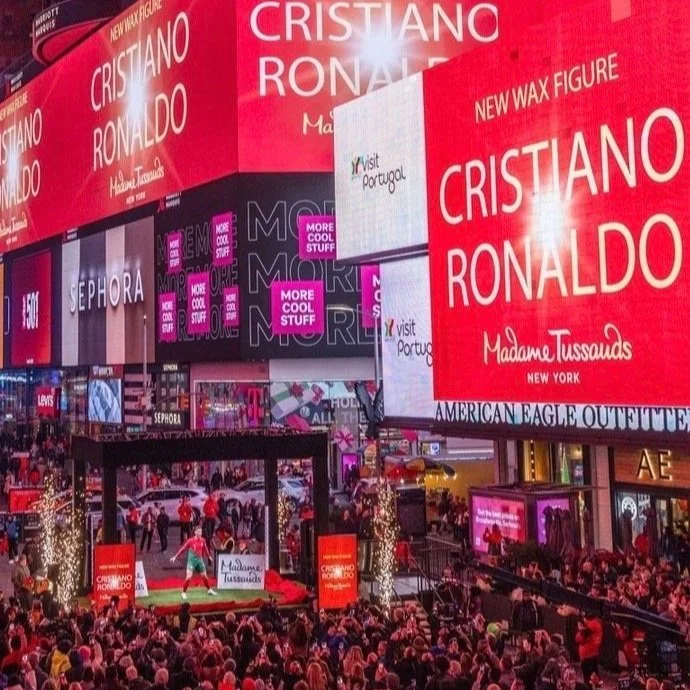
Large-scale product launch event with custom-fabricated environment and branded reveal moment for a premium brand activation in New York City
A product launch event is the first chapter of a product's story. What happens at that launch shapes how journalists write about it, how the brand's audience understands it, and how the product is positioned in the market for months afterward. Brands that treat a launch as a logistics problem, a venue, a date, a guest list, miss what the event is actually capable of producing. Disney's christening of the Disney Treasure in New York City in November 2024 generated national press coverage through a drone light show over the harbor. The event was designed to be a story, not just an announcement, and it was covered accordingly. That logic applies at every budget level and every category. A product launch event designed around what the product actually is, executed at the production quality the brand's positioning requires, creates earned attention that advertising cannot replicate. This post covers how to approach experiential marketing for product launches, what the format requires, and what separates launches that generate momentum from ones that generate attendance.
Why a launch event changes market entry
Advertising tells people a product exists. A launch event lets the people who matter most to the brand experience it firsthand, in an environment designed to present it at its best, before it's available anywhere else.
That sequence matters. A journalist who attended a launch event and experienced the product writes a different story than one who received a press release. An influencer who was in the room when something was unveiled creates content with a different energy than one who received a sample in the mail. A buyer who saw the product demonstrated in a well-produced environment makes a different decision than one who reviewed a spec sheet.
The launch event is a multiplier. It amplifies the product's entry into the market by reaching the people who reach everyone else. Getting it right is one of the highest-leverage investments a brand can make in a new product's commercial trajectory.
The Disney Treasure launch: what a well-designed launch event looks like
In November 2024, Disney Cruise Line christened its newest ship, the Disney Treasure, in New York Harbor. The christening ceremony featured a drone light show over the water, with the Manhattan skyline as the backdrop.
The production decision to hold the christening in New York rather than at the ship's home port in Florida was a brand statement. New York generates press. New York has the cultural weight that a Disney flagship launch deserves. The visual of a drone light show over the harbor, in one of the most photographed cities in the world, was designed specifically to be filmed and shared. The resulting imagery traveled through press and social media nationally, reaching an audience far beyond the people physically present.
The product being launched was a cruise ship, which is not a category most brands operate in. The lesson is in the logic, not the format. Disney identified that the launch moment could become a news event if the production was ambitious enough, and then designed the event around that opportunity. The earned media value from a single night of production dwarfed what a paid campaign at the same budget would have produced.
That same logic applies to a fashion brand launching a new collection, a CPG brand introducing a new product line, or a technology company unveiling a new device. The question is always the same: what does the launch event have to be for the press, the audience, and the content to work?
The objectives a launch event should serve
A product launch event can serve multiple objectives simultaneously, but it has to be designed around a clear primary goal. The objectives that launch events most commonly serve:
Press and earned media. The event is designed to generate coverage. The guest list centers on journalists, editors, and critics who reach the brand's target audience. The environment is built to be visually compelling and worth writing about. The product is presented in a context that makes the story obvious.
Influencer content. The event creates conditions for high-quality, high-reach social content. The design is photography-forward. The moments worth capturing are planned into the run of show. Influencers are briefed with enough context to tell the product's story rather than just document the room.
Trade and buyer relationships. The event gives buyers, retail partners, and industry contacts a firsthand experience of the product in its intended context. The goal is not press coverage but commercial relationship building.
Consumer launch moment. The event is consumer-facing: a pop-up, a public activation, or a ticketed experience that gives the brand's audience access to the product before it's widely available. The objective is purchase intent and word-of-mouth.
Most launch events serve two or three of these objectives. The mistake is serving all four without prioritizing any of them. A press-focused event and a consumer-facing event have different guest lists, different design priorities, different run-of-show structures, and different production approaches. Trying to do both with one event usually means doing neither well.
What the production has to deliver
A product launch event lives or dies on whether the production quality matches the product's positioning. A luxury product presented in a poorly designed environment creates a gap that guests notice immediately. A mass-market product presented in an over-produced event creates a different kind of disconnect. The production has to match the promise.
The environment should make the product case. This is the principle that separates strong launch events from standard ones. The space, the materials, the lighting, the sensory experience of being inside the event, should all communicate what the product is and why it matters. An attendee who understands the product more deeply because of where they experienced it is the outcome the production should be designed to produce.
The reveal moment has to be designed. Not announced. Designed. The moment when the product is first experienced by the room is the most important moment of the event. It has to be staged in a way that creates a genuine reaction, which generates the content and the energy that drives the rest of the event. A reveal that is mechanically competent but emotionally flat produces a flat room.
Photography and video have to work. Every launch event is producing content that will represent the product and the brand in media. The lighting, the staging, and the visual environment have to work on camera as well as they work in person. A beautiful environment that photographs badly is a production failure, even if the guests in the room were genuinely impressed.
The flow has to be considered. How guests move through the event, in what sequence they experience the product and the environment, and what they take away at the end all have to be planned. The brand controls the narrative of the event through the production. A poorly considered flow produces a random set of impressions rather than a coherent story.
Product launch formats
Different product categories and launch objectives call for different formats. The most commonly used:
Exclusive press and VIP preview. A controlled-environment event for a small, curated guest list: journalists, editors, key influencers, and industry contacts. The intimacy allows for genuine product demonstration and relationship-building that larger events don't support. This format works best for products that benefit from hands-on experience and detailed explanation.
Consumer pop-up. A public-facing activation that gives the brand's audience access to the product before it's widely available. Lines, exclusivity, and social content are features of this format. SKIMS has used pop-up launches to create demand that outpaced the product's actual availability, which amplified the commercial launch that followed.
Tentpole launch event. A large-scale event that combines press, influencers, trade contacts, and consumer access in a single production. The scale justifies the ambition: a remarkable venue, a strong reveal moment, and a production that generates content from multiple angles simultaneously. This format requires the most production investment and produces the most visibility when executed well.
Sequential city launches. A product that needs to launch in multiple markets uses a touring format: the same core experience produced in different cities over a defined schedule. The format builds national presence and generates market-specific press in each city. The production requirement is designing a launch experience that travels without losing quality.
Retail integration. A product launch embedded in an existing retail environment, a pop-up within a partner retailer, a takeover of a flagship store for a defined period. This format combines the brand's launch objectives with the retail partner's foot traffic and credibility.
Fashion brand product launches
Fashion product launches have specific requirements that other categories don't.
The aesthetic bar is higher. Fashion audiences are expert at reading quality. A production that looks slightly off, in terms of materials, lighting, or spatial design, reads as off to people who make these judgments professionally. The production team has to understand fashion aesthetics, not just event production.
Speed is a constraint. Fashion operates on a calendar. The collection has a window. Production has to move at the pace the calendar requires without the quality suffering. A production partner that needs a 16-week lead time for a 10-week calendar is not the right partner.
The show format has specific demands. Runway production is the most technically demanding format in fashion events: stage construction, lighting design, model logistics, seating, and the show itself all have to function as a single coordinated system. The environment around the runway communicates the collection's positioning before a single look appears.
Content is the primary output. At a fashion launch event, the photos and videos that come from the event are as important as the event itself. The campaign imagery, the editorial coverage, and the influencer content all come from this moment. The production has to be designed to produce that content at the quality the brand needs.
CPG brand product launches
Consumer packaged goods brands launching new products face a different set of challenges. The product is often small, tactile, and needs to be tasted, smelled, or tried to be understood. The launch event has to create conditions for that experience at scale.
Sampling done right. A CPG launch event that puts the product in people's hands in a well-designed environment is categorically different from a sampling table outside a grocery store. The environment changes what the sampling means. An attendee who tries a new beverage in a space designed around that product's sensory world has a different experience than one who takes a sample cup from a folding table.
Demonstration is the brief. CPG products often need to show what makes them different, not just present the packaging. A launch event format that builds demonstration into the design, cooking stations for a food product, application moments for a beauty product, sensory stations for a fragrance, is doing work that advertising cannot.
Retail buyer consideration. CPG launches frequently need to impress retail buyers as much as consumers. A launch event that runs a press and influencer evening followed by a trade day, or that designs separate environments for each audience, addresses both objectives without compromising either.
Common mistakes in launch event production
Designing the aesthetic before defining the objective. The look of the event follows from what the event is supposed to produce. Brands that start with a mood board and work backward to the brief often produce events that look good and achieve nothing specific.
Underestimating the reveal. The product reveal is the most important moment of the launch event and is frequently underproduced. It gets a minute in the run of show with no design consideration. A reveal that creates a genuine emotional response in the room produces content that travels. One that doesn't produce nothing worth sharing.
Confusing attendance with impact. A launch event that attracts 500 people but doesn't generate a single piece of press coverage or meaningful social content has not launched the product. Attendance is a means to the outcome, not the outcome itself.
Production quality below the product's standard. This is the most expensive mistake. A premium product presented in an underproduced launch event communicates a brand standard the product itself doesn't match. That gap is visible to the press and trade contacts in the room, and it shapes the coverage and the commercial conversations that follow.
Working with IDEKO on a product launch
IDEKO's brand activation services cover product launch events across categories and scales. The team handles design, permitting, fabrication, and on-site execution under one roof, which is what complex launch events require when the timeline is fixed and the production standard is not negotiable.
Browse the IDEKO project portfolio for examples of brand activation and event production work that reflects the production standard a launch event requires.
If you're planning a product launch and want to talk through the format, the production scope, and what the event needs to achieve, get in touch with the brief. The earlier the production conversation happens, the more the event can be designed to serve the launch rather than accommodating it.
The product is ready. The launch event should be too.