

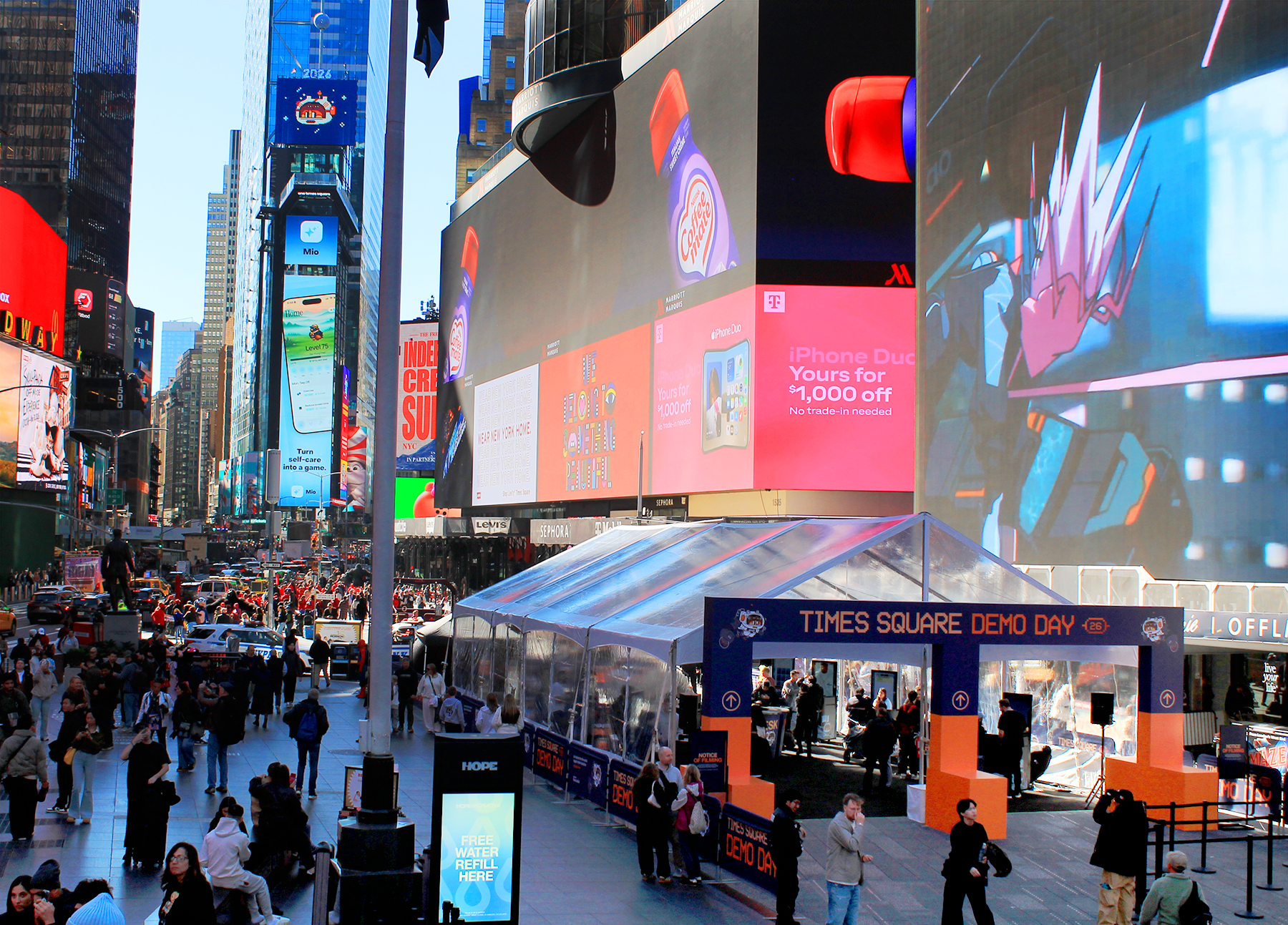
Crowd gathered at a brand activation on a Times Square pedestrian plaza, with large digital billboards lit above
TLDR: Digital billboard advertising in Times Square buys attention for a few seconds. A live activation on the plazas below turns that attention into an experience people step into, film, and share. The strongest campaigns plan both together, so the screen points people to the activation and the activation gives the screen a reason to exist. Getting there means working through the city's permit process for the Broadway plazas, which runs through the Street Activity Permit Office and the Times Square Alliance. Start planning early, design for the crowd, and treat the billboard and the build as one campaign.
Why a billboard alone leaves value on the table
Times Square does not have an attention problem. According to the Times Square Alliance, roughly 220,000 pedestrians entered the district each day in 2024, and the busiest days reach as high as 330,000.
The problem is what happens after the glance. Someone looks up, sees your creative, and keeps walking toward the subway. That moment has value, but it ends at the curb.
A live activation changes the math. People stop. They queue, touch the product, take a photo, and post it. Your billboard stops being a message people pass and becomes a signal that something is happening right now, a few steps away. That is the core idea behind out-of-home experiential marketing: the screen draws people in and the activation gives them something to do when they arrive.
How the screen and the activation work together
Think of the two as one campaign with two jobs.
The screen's job
Announce the activation with a clear, short call to action ("Live on the plaza until 8 p.m.")
Change content during the day as the activation runs, so the screen reflects what is happening below
Carry user content or live footage from the activation, if your media owner and legal team approve it
Keep running the message after the activation closes, so the campaign has a tail
The activation's job
Give people a physical reason to stop: a product trial, a photo moment, a performance, a giveaway
Create content worth posting, framed so the billboard sits in the background of the shot
Capture value on site, whether that is sign ups, sampling, or sales, depending on the permit and goals
Interactive billboard campaigns go one step further. The screen reacts to what happens on the ground, such as a live score, a countdown, or a visitor's moment shown in real time. Each of these needs separate sign off from the media owner, so build that into the plan early.
Permits: where most Times Square activations are won or lost
A billboard is a media buy. An activation on public space is a permitted event, and the rules are specific.
According to the Times Square Alliance, an outdoor event on the Broadway Pedestrian Plazas or on Times Square streets and sidewalks needs a permit from the Street Activity Permit Office (SAPO), part of the Mayor's Office of Citywide Event Coordination and Management. The Alliance coordinates with the city on these permits, and the city considers the Alliance's view of an event's impact when reviewing a request. Father Duffy Square is a separate option, handled through the Alliance.
A few rules from the Alliance's own plaza guidelines shape the design from day one:
The Alliance's permitting guide says plaza applications must be filed at least 45 days before the activation
Pedestrian Flow Zones must stay clear of any infrastructure at all times, and so must crosswalks
Any food or drink demonstration needs a Department of Health permit, plus ground protection approved by the Alliance to keep the plaza pavers from staining
NYPD will provide barricades free of charge for an event, with proper notice
These rules affect your footprint, your queue, and whether sampling is even possible. Rules change, so confirm current requirements with the city and the Alliance before you lock a concept.
This is the part of the job where experience pays for itself. IDEKO's event permitting team works with local, state, and federal agencies, keeps close ties with the city offices that control event permits, and has permitted activations in Times Square, including the Madame Tussauds Cristiano Ronaldo "Times Square Takeover."
Designing for the busiest pedestrian space you will ever build in
A build that works in a quiet plaza can fail in Times Square. Plan around the crowd, not the render.
Queue first, set second. Decide where the line goes before you finalize the structure. The flow zones cannot hold your queue.
Build for the photo angle. Place the activation so the billboard, the product, and the person all fit in one phone frame.
Keep the footprint honest. Size the build to the permitted space, with room for staff, storage, and power.
Plan for daylight and night. Times Square looks different at noon and at 10 p.m. Lighting, screen brightness, and content should work for both.
Brief staff on what to say when it gets busy. A crowded plaza needs clear calls and fast throughput, not long product pitches.
Timing the media and the build
The billboard flight and the activation dates should be decided together. If the screen goes live a week before the activation, it can build anticipation. If it runs only during the activation, every impression should point to the plaza.
Work backward from your activation date. The permit lead time sets the earliest point you can commit to a date on the plaza. Your media booking, creative approvals, fabrication, and staffing all fit inside that window. If you are booking the screen first and asking about permits second, flip the order.
Measuring the campaign as one
Report the billboard and the activation together, because that is how the audience experienced them. Useful measures include:
People who engaged on site (trials, sign ups, samples, sales)
Social posts and content that show the screen and the build together
Earned media and press coverage
Any lift you can tie to the campaign window in search, site traffic, or sales
Agree on the measures before launch. It is hard to prove value from a campaign you did not set up to measure.
Beyond Times Square
The same approach works anywhere a city has large screens and public space: pair the media with a permitted moment on the ground. The permit process changes in every city, so check with the local authority before you plan the build. What stays the same is the logic. The screen earns the glance, and the activation earns the memory.
Planning a campaign in Times Square?
If you have a screen booked, or a date in mind and no permit yet, talk to us. Our experiential marketing team can help you plan the activation, the permits, and the build as one campaign. Start the conversation here.
