
Fashion event production: how luxury brands create buzzworthy experiences
Fashion and luxury brands operate in a category where the experience of the brand matters as much as the product. The bag, the shoe, the fragrance all carry meaning that goes beyond function, and that meaning gets built through every touchpoint a consumer has with the brand, including the events. A poorly produced launch event or a generic activation does more damage to a luxury brand than it does to a consumer brand, because the gap between the event quality and the brand's positioning is visible and felt immediately. Research shows 69% of consumers prefer brand experiences over traditional advertising, and for luxury consumers that preference is even sharper because what they're buying into is a world, not just a product. This post covers how fashion and luxury brands produce events that generate press, social content, and genuine brand heat, and what the production requirements behind those moments actually look like.
What makes a fashion event different
Fashion events operate on a different standard than most brand activations. The aesthetic bar is higher. The guest list is more discerning. The press in the room has seen everything and is looking for something specific: a moment, an environment, a detail they haven't seen before.
That standard creates production requirements that don't exist in other categories. Every surface has to be considered. Lighting is not a technical afterthought; it's a creative decision that affects how the product and the space photograph. The materials used in fabrication have to hold up to the scrutiny of an audience that knows quality when they're standing next to it.
The other difference is speed. Fashion operates on a calendar. The collection drops when it drops. The event supports a specific moment in the brand's year, and that moment is not flexible. Production has to move at the pace the calendar requires, which means the team executing it has to be able to work fast without the quality suffering.
The formats that work for luxury brands
Runway shows and presentations
Runway production is the most technically demanding format in fashion events. Stage construction, lighting design, sound programming, model logistics, seating for press and buyers, and the show itself all have to operate as a single coordinated system with no room for error.
The environment around the runway matters as much as the runway itself. Guests form an impression the moment they arrive. The way the space is designed, lit, and finished tells the story before a single look walks out. Brands that treat the set as an afterthought to the collection miss the opportunity to use the event as a complete brand statement.
Product launch events
When a luxury brand launches a new product, the event is the first chapter of the product's story. How the space is designed, who is in the room, what the press writes about the environment as much as the product, all of it sets the narrative.
The brands that do this well design launch events where the environment makes the product case without needing to explain anything. The attendee understands what the product is and what it means from being in the room. That kind of environmental storytelling requires production that is genuinely creative, not just technically competent.
Branded pop-ups and installations
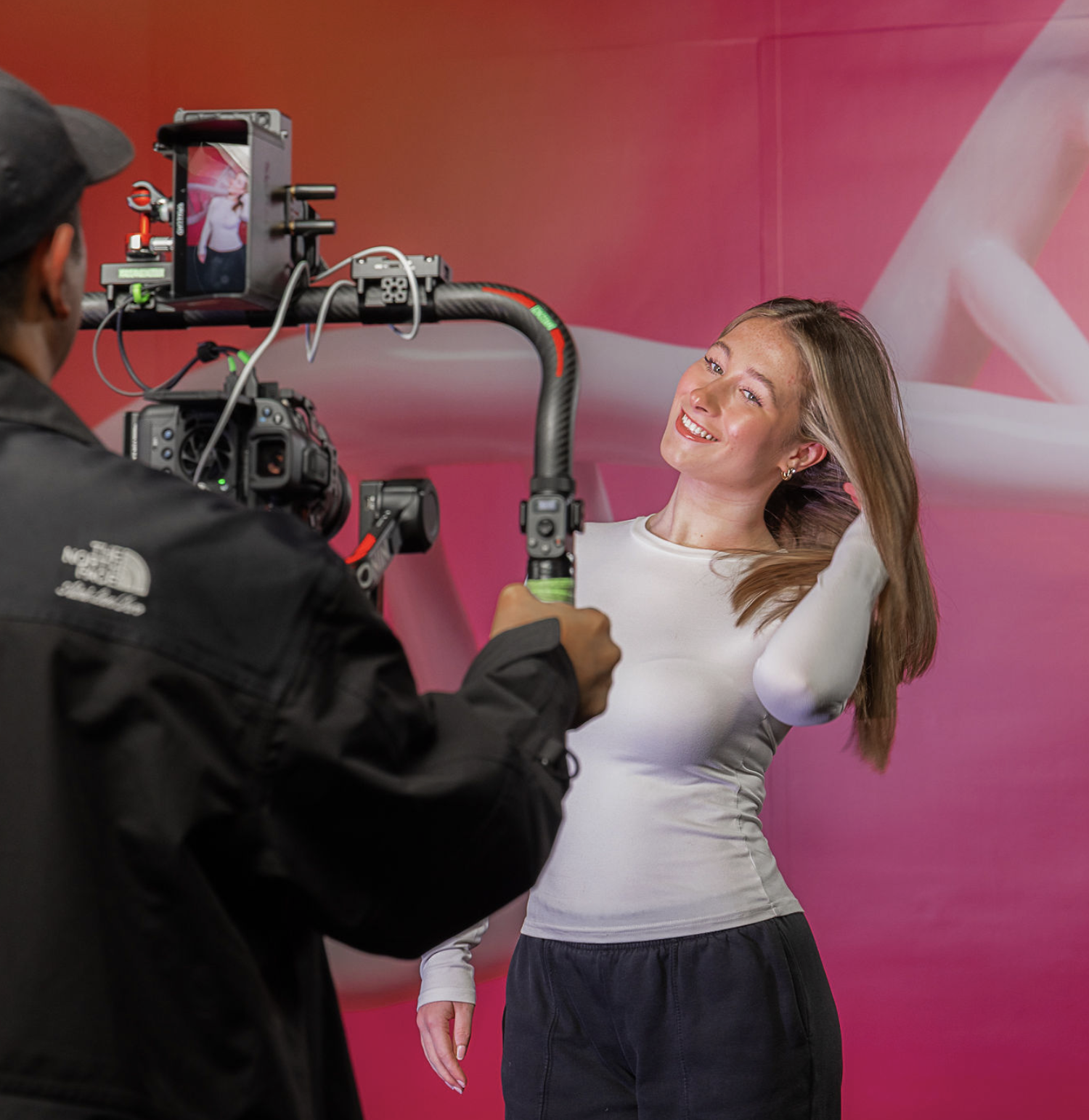
Luxury pop-ups are a different category from retail pop-ups. The goal is not primarily transaction. It's immersion. Brands like SKIMS have used pop-up environments to create cultural moments that generate press coverage and social content far beyond what the event itself reaches, because the environment is designed to be photographed and shared.
The production challenge with luxury pop-ups is building something that photographs as beautifully as it exists in person. Some environments look extraordinary in photos and disappoint in real life. The best luxury installations work both ways: they're worth experiencing and worth sharing.
Fashion week activations
New York Fashion Week activations run alongside the official schedule and compete for the attention of press, buyers, and influencers who are in the city and in the market for memorable experiences. The brands that generate coverage during Fashion Week are not always the ones on the official calendar. They're the ones that built something worth talking about.
At New York Fashion Week 2024, brands including YSL Beauty and Adobe engaged attendees with expansive activations, with some creating immersive environments, like Kate Spade New York's infinity tunnel installation, that became the visual story of the week for press and social media.
The competition for attention during Fashion Week means production quality is not enough on its own. The concept has to be distinctive. And the production has to execute the concept without compromise, because anything that feels unfinished or underpowered reads as a failure at this level.
What luxury production actually requires
The gap between a good event and a luxury event lives almost entirely in production decisions. A few specific ones matter more than others.
Materials and finish quality
Luxury consumers notice materials. Not always consciously, but they notice when something feels expensive and when it doesn't. The difference between a build using premium finishes and one using materials that look similar in a render but feel different in person is immediately apparent to an audience that spends money on quality as a way of life.
This is not an argument for spending more on every surface. It's an argument for spending thoughtfully. A well-designed luxury activation knows where quality will be noticed and allocates accordingly. That requires a fabrication team that understands material selection, not just one that can build to a drawing.
Lighting
Fashion events live or die on lighting. Products that look one way under standard venue lighting look completely different under a well-designed fashion lighting scheme. More importantly, the way a space photographs depends almost entirely on how it's lit.
Production teams that treat lighting as a technical requirement rather than a creative tool produce spaces that look flat in photos and fail to generate the visual content a luxury brand needs from the event. The lighting plan should be developed in parallel with the space design, not added at the end.
The guest experience from entry
Luxury events are judged from the moment of arrival, not from the moment the main experience begins. How guests check in, how the entrance is designed, whether the first impression matches the quality of everything that follows. These details are production decisions that often get underplanned because the focus goes to the main experience.
A guest who arrives at an event and waits in a disorganized line before entering a beautifully designed space has already formed a negative impression before the experience begins. The production brief has to cover the full guest journey, not just the centerpiece.
The press and content dimension
Fashion events are content creation opportunities as much as they are brand experiences. The photos and videos that come out of a well-produced fashion activation travel further than the event itself. For luxury brands, the visual quality of that content is a brand asset.
That has practical production implications. Where are the natural photography moments in the space? How does the lighting serve a camera as well as a human eye? Are there design elements that are built specifically to generate shareable content?
These questions should be in the production brief before anything gets built. An environment designed without thinking about how it photographs is an environment that will generate mediocre content regardless of how well it executes the live experience.
How H&M and SKIMS think about events differently
The approach to fashion event production varies significantly across the price spectrum, and both ends of it have lessons worth noting.
H&M's large-scale activations tend to focus on accessibility and scale: big environments, high foot traffic, and content designed to reach a mass audience. The production priorities are throughput, visual impact at scale, and a social-sharing hook that works for a broad consumer. The fabrication has to look expensive without being expensive, which is a genuine production challenge.
SKIMS has used events differently: smaller guest lists, higher production value per person, and environments designed to feel exclusive even when the brand's core positioning is inclusivity. The result is content that punches above the brand's paid media weight because the production quality generates organic coverage.
Both approaches are right for their respective brands. What they share is intentionality. The production serves a specific goal rather than just satisfying a brief.
Browse IDEKO's project portfolio for examples of brand activation work across scales and categories, including work for fashion and lifestyle brands.
What to look for in a fashion event production partner
Fashion brands sourcing a production partner for events need a team with specific capabilities beyond general event production experience.
Creative sensitivity. A production team that can execute a technical brief but doesn't understand fashion aesthetics will make decisions throughout the build process that undermine the creative vision. The team that fabricates your set has to understand why the finish matters.
Speed without quality loss. Fashion timelines are often compressed. The ability to work fast under deadline pressure without cutting corners on output is a production skill that has to be demonstrated, not assumed.
Permitting and location experience. Fashion activations in New York frequently happen in complex locations: rooftops, historic spaces, temporary builds in public plazas. Each requires permitting knowledge specific to the location. A production partner who has to learn the permitting process while on your timeline is a liability.
IDEKO's brand activation services cover fashion and luxury event production across formats. If you're developing an event concept and want to understand what's achievable at your timeline and budget, get in touch with the brief.
The gap between a good fashion event and a great one is almost always production. It's worth getting right.